

Vesseling the Sacred: Circles of Trust and group Spiritual Direction

For most of my working life, I have been an educator in the higher education sector, so working with groups is in my bones. Something very special happens in groups: they have their own energy and dynamic. At their best, groups are places where each participant develops their capacity to hold space for others, to listen deeply, to offer helpful questions, and to support others’ learning and growth. In the context of spiritual/soul work groups, we are trusting in and nurturing our capacity to minister to each other’s spiritual needs. There might be a group facilitator, but no-one is “the expert”. To do the work of the spirit in groups is to embody and to practice the "priesthood of all believers".
I wonder if, as a practitioner of the ministry of one-to-one Spiritual Direction, you have ever been invited or called to facilitate groups? Perhaps you have been asked to do group Spiritual Direction, or to lead quiet days or retreats? It may be that you offer group supervision for Spiritual Directors.
If so, you have no doubt found that many of your Spiritual Direction skills are transferrable to group settings:
a contemplative and receptive listening presence;
the ability to ask open and inviting questions;
the capacity to hold silence.
And it may be that you feel you have more to learn about the specific skills required to hold space for groups:
awareness of group dynamics;
how to manage the time;
how to structure the pace and variety of activities;
how to ensure that everyone feels included and has the opportunity to speak if they wish to;
how to respond to someone who is dominating the group, or who is offering inappropriate advice or correction to others.
Reflection: In what ways do you use your spiritual accompaniment skills when working with or in groups e.g. leading prayer groups, quiet days, retreats, supervision groups?
I have noticed that several organisations that offer training for Spiritual Directors are now offering courses intended to support those who are or will be leading groups in prayer. These formation courses are surely responding to a need. Perhaps many of us are now being invited into spiritual ministries that we have not been explicitly trained for? Or perhaps, if you are like me, you find yourself equally or even more drawn to group work than to one-to-one spiritual accompaniment.
My particular interest is in exploring the interface between Spiritual Direction and my work as a facilitator of Circles of Trust, and in using the principles and practices of Circles of Trust to vessel the sacred. The practice of Circles of Trust originates in the work and writings of Parker J. Palmer, who is an American educator, activist and author. The work has been developed and diversified over some 30 years by a network of trained facilitators under the aegis of the US-based Center for Courage & Renewal.
Palmer is a Quaker, and Quaker spirituality definitely informs the work, in particular the practice of Clearness Committees – a community-supported process for discernment.
“The clearness committee… is a focused microcosm of a larger circle of trust, a setting in which we have an intense experience of what it means to gather in support of someone’s inner journey.” *
The first cohort of people whom Palmer mentored were teachers, and the communal practices of Circles of Trust were first developed in the context of fostering the personal and professional integrity of teachers – the first of Palmer’s books which brought him widespread recognition was entitled The Courage to Teach. Over time, the work has been adapted for specific cohorts of people: those who work in tertiary education; leaders; pastors and ministers of religion; elders; indigenous people and people of colour; the LGBTQ+ community. And many retreats (online & face-to-face) are still offered to the “general public”. The work speaks openly about the soul (or the inner teacher, or the inner light, or the still small voice within), but, when offered to “general” cohorts, does not use explicitly religious language.
Reflection: How can we work with groups and individuals in ways that welcome diversity and foster inclusion?
Circles of Trust work is founded in the conviction that each of us has an inner teacher: we carry the wisdom we need within us. The practices of the circle include:
the Touchstones which guide and frame the work, and which each participant seeks to honour in order to co-create safe space;
deep listening;
the use of “third things” – poems, texts, music, images, video, haptic experiences – as a mirror to aid reflection, to help us to see more clearly what is alive in us and to reveal that to ourselves;
the offering of open, honest questions which support reflection and inquiry;
welcoming silence as a member of the group;
trust in the power of our presence and our witnessing to “hear each other into deeper speech”.
Palmer writes
“…the circle itself is focused on inward and invisible powers. Its singular purpose is to support the inner journey of each person in the group, to make each soul feel safe enough to show up and speak its truth, to help each person listen to his or her inner teacher. In a circle of trust, we practice the paradox of ‘being alone together,’ of being present to one another as a ‘community of solitudes’.” *
My experience of being in Circles of Trust, both as participant and as facilitator, has given me a deep knowing that circle work is indeed soul work, sacred work. That the work can be done with or without using explicitly “religious” language makes it, I think, well suited to these times.
As Julia Mourant commented at a recent LCSD members’ event, in today’s world there is a widespread turning away from organised religion and from “religious” language, and an equally deep yearning for spiritual nourishment. We need to find language that can speak to people of all faiths & none. I personally embrace the Center for Courage & Renewal (CCR) Nondiscrimination Policy:
“Courage & Renewal facilitators do not discriminate on the basis of race, creed, color, ethnicity, national origin, religion, sex, sexual orientation, gender expression, age, height, weight, physical or mental ability, veteran status, military obligations, and marital status. We welcome all.”
Reflection: How can we accompany people who do not identify with a faith tradition or language, or who are alienated from organised religion, or who describe themselves as “spiritual but not religious”?
For me, this is about holding the knowledge that “bidden or not bidden, God is present”. (I learned recently that Carl Jung, the early-20th-century Swiss physician and psychiatrist, had these words inscribed above his doorway and on his tombstone.) I love these words from Rachel Naomi Remen’s book,Kitchen Table Wisdom, which apply equally to Spiritual Direction and to Circles of Trust:
“The places in which we are seen and heard are holy places… Perhaps the most important thing we ever give each other is our attention. … When people are talking, there’s no need to do anything but receive them. … Listen to what they’re saying. Care about it. Most times caring about it is even more important than understanding it. …A loving silence often has far more power to heal and connect than the most well-intentioned words. …In the silence of listening, you can know yourself in everyone, the unseen singing softly to itself and to you.”
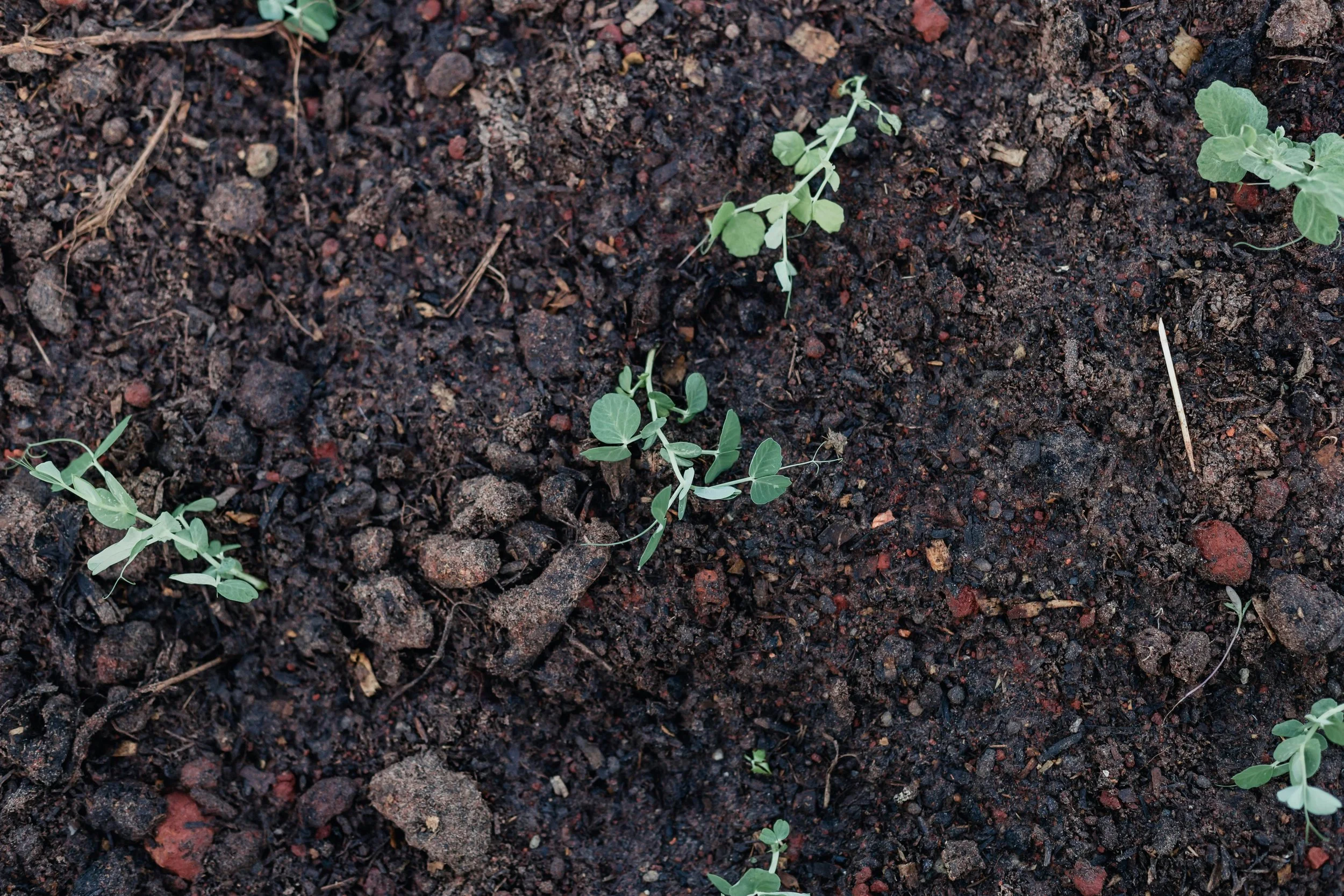
In my experience, participants in Circles of Trust often experience and name what the Center for Courage & Renewal refers to as “values and principles”, and what I would call “graces”, as they have revealed themselves in the process of doing the work and are, so to speak, offering themselves to be named. I have heard participants name Wonder, Hope, Possibility, Love and Community as the qualities which have manifested in our work together and as the “seeds” that the participants wish to carry with them into the world. These values and principles could be said to be “epiphanies” – manifestations or revelations which arise or emerge from and in doing the Circles of Trust work.
The original Greek ἐπιφάνεια is made up of the prefix epi- meaning “out” or “forth” and the root of the verb φαίνω meaning “to shine”, or, by extension (middle voice) φαίνειν “to be brought to light”, “to appear”, “to become clear” or “to manifest”. A reasonable translation might be “to show up”. When we show up in the circle in our integrity and authenticity and vulnerability, these graces will, I believe, naturally also show up. These epiphanies are, to my mind, precisely the same shift that we can experience in a Spiritual Direction session in the movement from narrative and reflection to a lived and present encounter with the divine.
I recall one particular experience in a small circle where responsibility for facilitation is rotated. One member of the circle chose to honour their commitment to facilitate after the death of a parent just days previously. They brought their grief to their facilitation, and shared third things – images of streams – that invited us to be in that thin place between this world and another, between living and dying. I was profoundly touched by this person’s grace and courage in choosing to be with the group so soon after their mother's passing. It was a real privilege to be with them at this time, and I had a deep sense of how we each held the space for each other. For me, it was a testament to the power of this work that the bereaved person was willing to be vulnerable and genuine, and was empowered to be our guide and companion, inviting us through the third things they had chosen to follow the streams into the darkness and into the light.
Reflection: Jung’s inscription suggests that the Divine/Grace is present regardless of our awareness. In your practice, what specific internal "noise" most often prevents you from noticing that which is already there?
If "showing up" (epiphaneia) is the goal, what is one "expert" habit you could let go of today to make more room for your "authentic self" to manifest?
Finally, I would like to expand on that idea of holding space for each other, and to highlight the centrality of community in Circles of Trust work: the awareness that the work of personal & societal wholeness needs to be done in community; the healing of trauma, grief and separation needs to be done in relationship; we need to become more skilled in ways of being with each other that do not perpetuate dynamics of oppression, supremacy and violence. From its inception in the work and writings of Parker Palmer, Circles of Trust work has been explicitly not just about personal growth or the nourishment of our individual spiritual lives, but also about how we can resource ourselves to be agents of change and renewal in the world. The idea of vocation is central to Palmer’s thinking: that place where our soul’s deep joy meets the world’s great need.
“Our deepest calling is to grow into our own authentic self-hood, whether or not it conforms to some image of who we ought to be. As we do so, we will not only find the joy that every human being seeks – we will also find our path of authentic service in the world.”*
There is an echo here of Rev. Dr. Martin Luther King, Jr.’s insistence that redemption can never just be individual; it can only be communal:
…the end is reconciliation; the end is redemption; the end is the creation of the beloved community. It is this type of spirit and this type of love that can transform opposers into friends. It is this type of understanding goodwill that will transform the deep gloom of the old age into the exuberant gladness of the new age. It is this love which will bring about miracles in the hearts of [human beings] - from “Facing the Challenge of a New Age”, 1956
*Quotations are from Parker J. Palmer, A Hidden Wholeness: The Journey Toward An Undivided Life, 20th Anniversary edition (2024) and Let Your Life Speak: Listening for the Voice of Vocation, 25th Anniversary edition (2024), both published by Jossey-Bass, San Francisco
Reflection:
How does this quote “Our deepest calling is to grow into our own authentic self-hood, whether or not it conforms to some image of who we ought to be. As we do so, we will not only find the joy that every human being seeks – we will also find our path of authentic service in the world.” show itself in your own lives and the lives of those you accompany?
Has this blog offered you any affirmations, ideas, challenges or wonderings about how you work with or in groups?
Michèle le Roux
Michèle le Roux trained in Spiritual Accompaniment at the Ignatian Spirituality Centre in Glasgow, and co-facilitates the Refresher Course at LCSD. She is a practitioner of Non-violent Communication and a Facilitator of Circles of Trust. Michèle has 40 years of experience teaching in higher education, both in the UK and abroad. Her research and activism lie in the area of social justice in education, with a focus on practitioner and student wellbeing. She is editor-in-chief of a forthcoming book in the CUP Elements series Higher Education and Forced Displacement, which will report on the work of the Cara (Council for At-risk Academics) Syria Project. She seeks to position herself with integrity at the interface of these several professional identities and to build bridges, trust and community.
You can view her profile on the Center for Courage & Renewal website here.
You will find her upcoming Circles of Trust offerings listed there, including this, which may be of particular interest: https://couragerenewal.org/programs/vesseling-the-sacred-a-courage-renewal-learning-retreat-for-soul-workers/